
The control works today
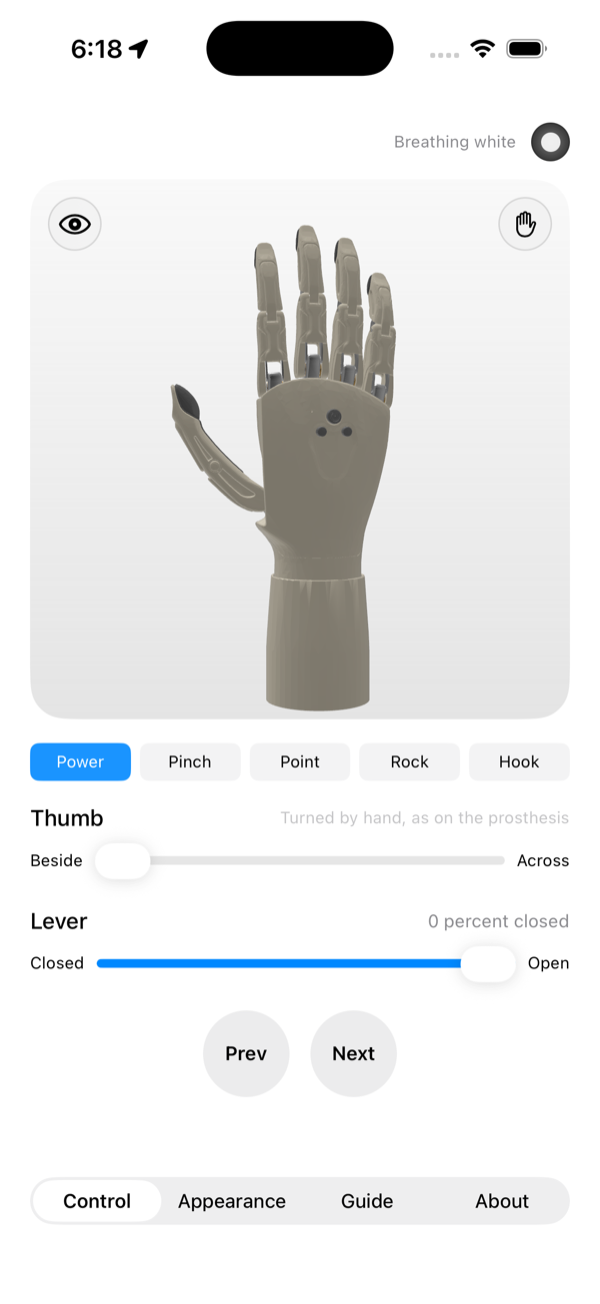
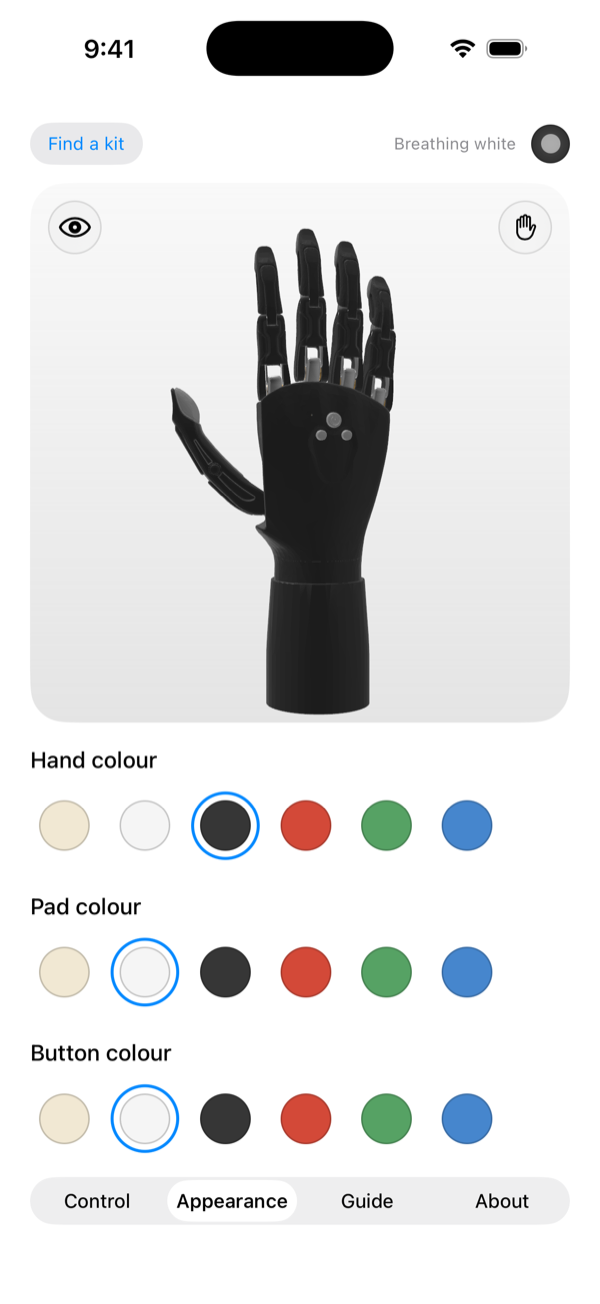
The app responds to movement input: the hand opens, closes, and changes grip. The videos show an earlier version of the control moving a physical prototype.
Deterica · Prosthetic hand control · No electrodes
We are developing a prosthetic hand controlled by rotation of the residual limb, without electrodes. The hand follows the position the user gives it. Two buttons set the movement range and select the grip.
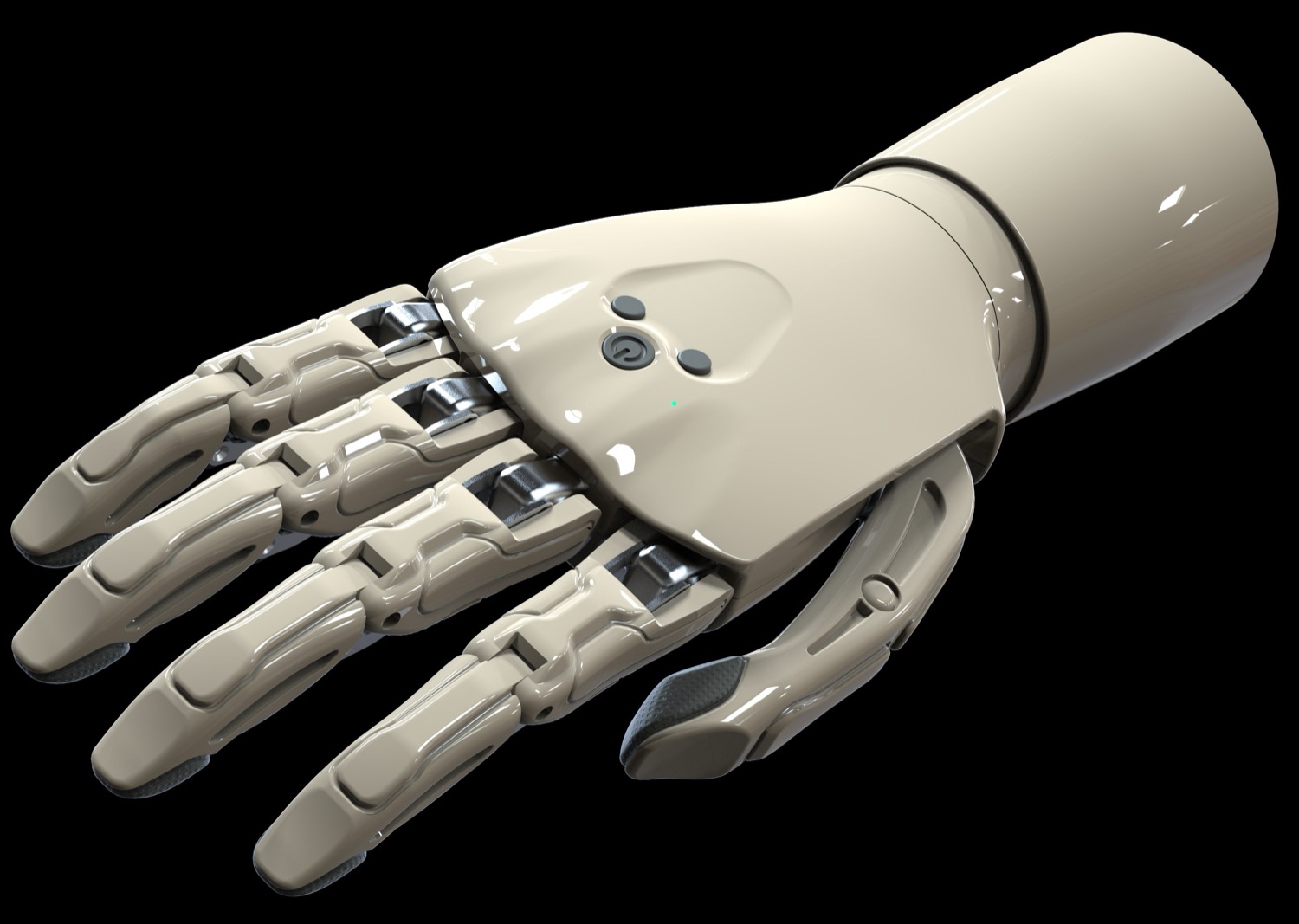
Not a sketch
A control method is easy to describe and hard to believe. So here is the hand that exists, and what works today.
The app responds to movement input: the hand opens, closes, and changes grip. The videos show an earlier version of the control moving a physical prototype.
The control already moved a real hand. Siarhei Arefyev built that hardware, and the recordings above are of that hand.
It runs with no kit at all. An on-screen slider and two buttons drive the same control logic, so the model is something a person can try.
The hand in the videos is a prototype. The team built it and tested it, and it is not a product. The kit is in development, and so is the hand it controls. Nothing here is for sale today.
"It runs" means the control answers and the hardware moved. It does not mean that a person can buy this, and it does not mean that it went through a clinical trial.
What we offer
A prosthetic hand costs more than a car and takes months to obtain. Nobody should have to buy one to find out whether this control model suits them.
So the app comes first, and it is built. It runs on a phone alone: an on-screen slider and two buttons drive the control logic, and a hand on the screen follows them. There is no kit to connect, and no prosthesis to wear. A person can hold the model in their hand and see what it does.
The kit is the next step, and it is in development. It puts the same control logic in a physical device. The design uses a contact fork: the user places the residual limb between two blades and rotates the fork around the sensor axis. The position goes to the app to move the virtual hand. The physical fit is not yet tested.
Learn more
01
How a movement a person already has becomes a hand that follows. How it differs from EMG, and what remains to be tested.
02
One idea, two builds: the first hand, what it proved, what it did not, and the new version we build now.
03
It began with my father. What I found in the market, and why I set out to build the thing I could not buy.
Contact
Interested in the app or the kit for yourself or someone close to you? Working in prosthetics or research? Write to the founder to learn more.